
16 Oct 2026
Indian Rupee May Weaken Towards 100 Per Dollar
Rising prices of crude oil: India spends a great amount of funds on crude oil imports. If the international price rises, a bigger dollar amount would be needed
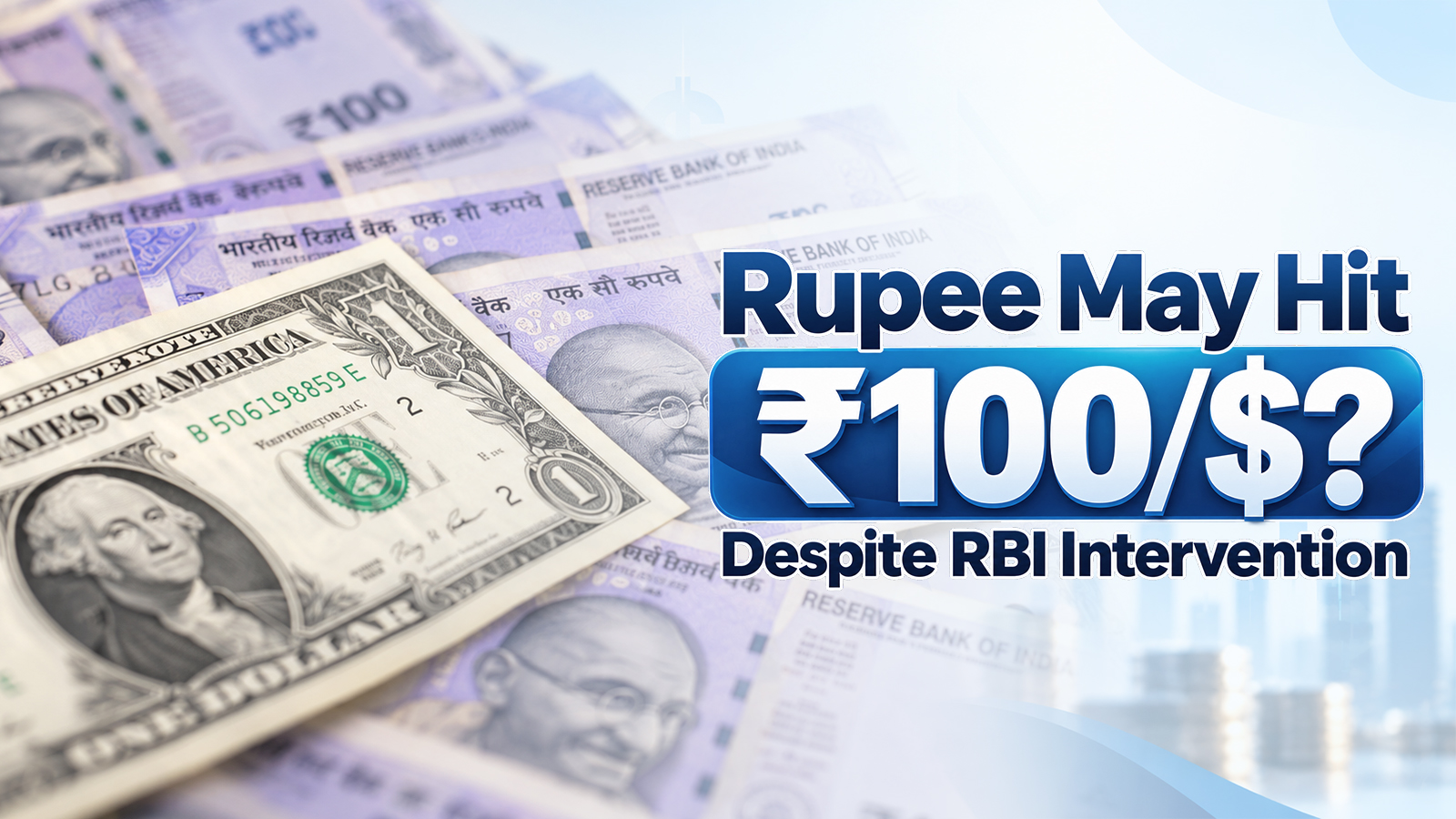
Indian Rupee May Weaken Towards 100 Per Dollar Despite RBI Intervention
New Delhi, October 16, 2026: Fynnedge, a financial news advisory service, tracks business and financial news that affects interest rates, consumer staples, and other markets. The Indian rupee may weaken toward the 100-per-dollar level despite the RBI’s efforts. Market experts believe that higher crude oil prices, withdrawal of foreign funds and a strong US dollar will keep putting pressure on the Indian currency. The Reserve Bank of India has taken steps to decrease the demand for the US dollar, which resulted in some improvements in the position of the Indian currency in the international market. Despite these RBI efforts, analysts say prospects of further appreciation may be unlikely following the RBI's failure to resolve the main causes of rupee depreciation.
Value of Rupee Keeps Dropping Despite RBI's Action
Despite the efforts of the Reserve Bank of India (RBI), the rupee continues to lose value with each passing day. There have been several ups and downs in the currency exchange rates of the rupee in 2026, as in September 2026, the rupee had an exchange value of ₹99.80, whereas at the end of May 2026, the rupee was trading at around ₹96.96. Although with the intervention of the RBI, the rupee continues to be above ₹97, concerns about its crossing the ₹100 mark still prevail.
On October 15, the rupee spiked to about ₹95.05, but most traders are unenthusiastic about the prospects of this upswing. As far as India's reserves are concerned, the amount was $734.6 billion on October 2.
Reasons for Persisting Decline of the Rupee
1. Rising prices of crude oil: India spends a great amount of funds on crude oil imports. If the international price rises, a bigger dollar amount would be needed to execute all of these acquisitions, making the U.S. currency only more expensive.
2. Capital outflow: When foreign capitalists are selling stocks or other financial instruments in India, they will need to get back the money earned. Hence, rupees will be exchanged for other currencies, making the local currency weaker.
3. Strong US dollar: A rise in US bond yields and global market worries can lead investors to seek dollar assets. This can cause a loss of value in other currencies, including the rupee.
4. Larger current account deficit: If India spends more on imports than it receives from exports and other current account gains, the deficit can affect the currency.
Market strategists have predicted that the rupee could reach ₹97 by the end of 2026 and ₹98 by mid-2027. The ₹100-per-dollar level remains a risk scenario rather than a confirmed outcome.
RBI Steps In to Control Currency Weakness
The RBI has introduced several measures to reduce pressure on the rupee. These include restrictions on certain foreign exchange derivative transactions, higher cash requirements for specified transactions and a special dollar purchase facility for oil marketing companies.
The central bank is also attempting to reduce speculative activity in the foreign exchange market. These steps may help manage short-term volatility and reduce immediate dollar demand.
However, currency intervention cannot eliminate every external risk. Higher oil prices, changes in global interest rates and continued foreign investment withdrawals may limit the effectiveness of these measures. The RBI must also balance currency stability with domestic liquidity, inflation and broader economic growth.
What Could a Weaker Rupee Mean for Indian Consumers?
A sustained decline in the rupee can affect everyday expenses and financial planning. Imported electronics, fuel-related costs, overseas education and international travel may become more expensive. Businesses that depend on imported raw materials may also face higher operating costs, which could eventually affect consumer prices.
For households managing rising expenses, borrowing decisions may become more important. People considering a personal loan in noida should compare interest rates, processing fees, repayment periods and monthly instalments before choosing a lender.
Consumers searching for a personal loan noida should also review their existing financial commitments and ensure that the proposed EMI fits comfortably within their monthly budget.
Although currency depreciation does not automatically lead to an increase in personal loan interest rates, changes in inflation, monetary policy and lenders’ funding costs can influence borrowing conditions.
What Should Borrowers Consider Before Taking a Loan?
Financial planning becomes especially important when household expenses are under pressure. Borrowers should assess their income stability, emergency savings and current debt obligations before applying for additional credit.
Those exploring an instant personal loan in noida should verify the lender’s credentials, understand the complete cost of borrowing and avoid making decisions based only on the promise of quick approval.
A practical borrowing checklist includes:
● Compare the annual interest rate and total repayment amount.
● Check processing charges, late-payment penalties and other applicable fees.
● Use an EMI calculator to estimate monthly repayments.
● Maintain sufficient savings for emergencies and essential expenses.
● Borrow only the amount required and avoid taking on unaffordable EMIs.
People evaluating a personal loan in noida should focus on affordability rather than speed alone. A well-planned repayment schedule can help reduce financial pressure if household costs increase.
Market Outlook: Temporary Relief or Further Weakness?
The rupee’s near-term direction will depend on several interconnected factors, including crude oil prices, foreign capital flows, US monetary policy and the effectiveness of RBI interventions. Recent measures have helped the currency recover, but they have not removed the underlying economic pressures.
If oil prices remain elevated and foreign investors continue withdrawing funds, the rupee could face renewed selling pressure. On the other hand, stronger capital inflows, lower energy prices and improved global sentiment could support a recovery.
For anyone considering a personal loan in noida, the broader lesson is to avoid making borrowing decisions based on currency forecasts alone. Loan affordability depends more directly on income, lender-specific rates, creditworthiness and repayment capacity.
Borrowers comparing a personal loan noida option should assess the total cost and repayment terms rather than assume that economic uncertainty will immediately change loan pricing.
Similarly, anyone considering an instant personal loan in noida should check the lender’s terms carefully before accepting an offer.
Conclusion
India’s rupee may remain under pressure despite the RBI’s efforts to stabilise the currency, with the possibility of a move towards ₹100 per dollar depending on global and domestic economic developments. The forecast is uncertain, and further intervention or an improvement in capital flows could change the outlook.
For consumers, careful financial planning remains essential when prices, interest rates and economic conditions are uncertain. Fynnedge encourages informed borrowing decisions, with borrowers evaluating a personal loan in noida based on affordability, transparent charges and manageable repayments rather than relying on market predictions alone.