
10 Nov 2026
Financial Impact of Hormuz Developments on India
LNG Shipments through the Strait of Hormuz Rise to the Highest Level Since the Start of the Iran War
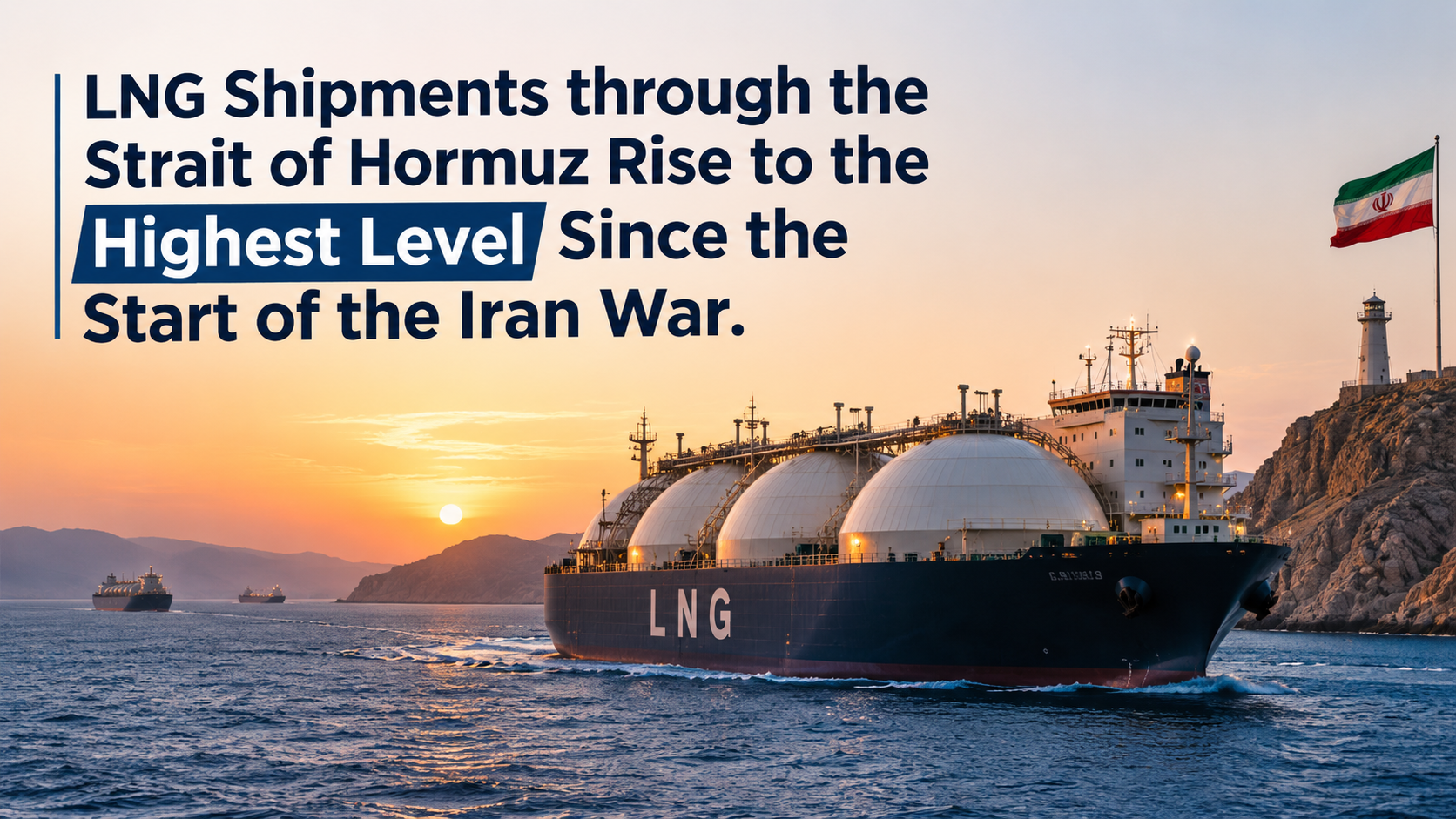
LNG Shipments through the Strait of Hormuz Rise to the Highest Level Since the Start of the Iran War
Growing shipments of Liquefied Natural Gas (LNG) are seen as a boost to global energy markets amid ongoing tensions in the Middle East.
New Delhi, Nov 10, 2026: Liquefied Natural Gas (LNG) shipments through the Strait of Hormuz rose to the highest levels seen in a month in October, after the US-Iran war disrupted shipments earlier this year. A total of 31 fully-loaded LNG tankers transited through the strategic choke point last month — up from 23 in September. While LNG is being moved more freely, security issues are still a factor.
This could have an impact on global energy markets, international trade and how India can get energy supplies.
LNG Shipments through Hormuz See Signs of Recovery
The October figures show that LNG is starting to move from major Middle Eastern exporters. Of the 31 vessels, 23 were loaded at the Ras Laffan exports terminal in Qatar. Eight vessels were loaded at Das Island in the UAE.
Data from S&P Global Energy shows that October recorded the highest number of loaded LNG tanker departures since February, when the conflict began disrupting shipping operations.
The increase also reflects improvements in Qatar's LNG export activities. According to Kpler's vessel-tracking data, 42 LNG cargoes were loaded during October, compared with 27 in September.
The Fynnedge news desk notes that the improvement is an important development for countries that depend on Middle Eastern energy supplies. However, the recovery does not necessarily indicate that shipping operations have returned to normal.
Qatar's LNG Exports Record Higher Activity
Qatar remained the largest contributor to LNG shipments passing through the Strait of Hormuz during October. Loading activity at Ras Laffan reached 35 cargoes, representing more than 2.7 million tonnes of LNG. This was the highest monthly loading volume recorded since the beginning of the conflict.
By comparison, Qatar shipped around 6.2 million tonnes of LNG in February, an indication of the difficulties facing the country’s energy sector.
Meanwhile, exports from the UAE’s Das Island facility remained quite steady, as in October, the number of loading operations was recorded as seven, equal to the figure from September.
Fynnedge statements indicate that Qatar’s rising volume of exports may serve current overseas customers, especially in Asia. However, damaged production facilities, transport difficulties, and security concerns in the region are still challenges.
Ship-to-Ship Transfers Help Maintain LNG Deliveries
In October, another milestone was reached with the execution of ship-to-ship LNG transfers in the vicinity of Omani anchorage Sohar.
The two ships that carried LNG from Qatar’s Ras Laffan terminal have successfully performed ship-to-ship transfers after passing through the Strait of Hormuz.
The SC Prestige ship transferred its LNG supplies to the BW ENN Crystal Sky, which was then bound for South Korea.
In the other operation, the Al Mafyar transferred LNG to two ships, Shandong Redwood and Ejnan, which afterwards delivered LNG to Pakistan.
These arrangements demonstrate how shipping companies are adapting their transportation strategies to maintain energy deliveries despite operational uncertainties.
What the Recovery Means for Energy Markets
The increase in LNG shipments could bring some relief to international energy markets, especially countries that rely heavily on imported natural gas.
Higher transportation volumes can improve supply availability and reduce some of the pressure created by earlier disruptions. However, the overall market situation will continue to depend on geopolitical developments, production capacity and shipping costs.
The Fynnedge financial updates perspective highlights several important factors:
● Energy supply: Higher LNG shipments could improve the availability of natural gas in international markets.
● Transportation expenses: Continued security risks may keep shipping insurance and freight costs elevated.
● Import dependency: Countries dependent on Gulf energy supplies may remain exposed to regional disruptions.
● Market stability: Consistent tanker movements could gradually improve confidence among energy buyers and suppliers.
● International trade: Better LNG transportation could support industries that depend on natural gas for production and operations.
For India, these developments are particularly important because natural gas plays a role in power generation, fertiliser production, industrial manufacturing and city gas distribution.
Financial Impact of Hormuz Developments on India
India imports a substantial portion of its energy requirements, making international oil and gas transportation routes important for its economic stability.
Any disruption in the Strait of Hormuz can create additional pressure on energy procurement costs, particularly when international buyers compete for alternative supplies.
The Financial impact of changing LNG transportation activity can extend beyond the energy sector.
Higher LNG availability may help reduce supply-related uncertainty for industries that use natural gas. On the other hand, elevated shipping expenses or renewed geopolitical tensions could increase the cost of imported energy.
Some important areas to watch include:
Industrial production: Natural gas availability can influence operating costs for fertiliser, chemical and manufacturing companies.
Inflation: Higher imported energy costs can eventually affect transportation, production and consumer prices.
Government expenditure: Changes in energy import prices may influence subsidy requirements and other public spending.
Currency movements: Higher import bills can increase demand for foreign currency and put pressure on the Indian rupee.
Business profitability: Companies with significant energy requirements may experience changes in their operating margins.
The Fynnedge financial updates analysis suggests that a sustained improvement in LNG transportation could be beneficial for energy-importing economies. However, the actual economic benefits will depend on international gas prices, shipping expenses and the reliability of future deliveries.
Security Concerns Continue Despite Higher Tanker Movement
Although October recorded improved LNG transportation activity, the security environment around the Strait of Hormuz remains uncertain.
The waterway is one of the world's most important energy transportation routes, connecting major Middle Eastern exporters with international buyers. Consequently, any military escalation or threat to commercial vessels can create immediate concerns for global energy markets.
The International Maritime Organisation has also raised concerns about vessel safety in the region. Shipping companies continue to evaluate operational risks before sending vessels through the strategic passage.
The Fynnedge news desk believes that the improvement in October should be viewed as a positive development rather than confirmation of a complete recovery. Maintaining regular and secure shipping operations will remain essential for restoring confidence among international energy traders.
What Lies Ahead for Global Energy Trade?
The rise in LNG tanker movements during October offers an encouraging sign for global energy transportation. Qatar and the UAE have contributed to the improvement, while ship-to-ship transfers have provided additional flexibility in delivering energy supplies.
However, the future direction of the market will depend on whether shipping companies can maintain regular operations without facing further security disruptions.
For India and other energy-importing economies, stable LNG supplies could help manage industrial requirements and reduce uncertainty surrounding energy procurement.
The Fynnedge news desk will continue to track developments in international energy markets, geopolitical risks and their economic implications.
Conclusion
The increase in LNG tanker movements through the Strait of Hormuz during October represents an important development for global energy trade. With 31 loaded LNG vessels crossing the waterway, transportation activity has reached its highest monthly level since the Iran conflict began.
Nevertheless, higher shipment volumes do not automatically mean that the energy supply chain has fully recovered. Production challenges, shipping expenses and regional security risks continue to influence market conditions.
Through Fynnedge financial updates and its coverage of international economic developments, Fynnedge highlights why the stability of major energy routes remains important for India and the global economy.
Updated